The Practical Firearms Guide: Selection, Safety, and Purpose
The Practical Firearms Guide: Selection, Safety, and Purpose
You’re standing at the counter, and the choice isn’t between a “handgun” and a “rifle.” It’s between a 9mm Glock 19 Gen5 MOS for concealed carry and a .223 Wylde AR-15 with a 16-inch barrel for home defense. That’s the level of specificity required for an effective purchase. This guide cuts through the noise with direct advice on matching a firearm to its intended role, because a $800 competition pistol is a poor choice for a first-time buyer needing bedside protection.
Defining Your Firearm’s Mission
Before you handle a single gun, define its job. “Home defense” is too vague. Are you in an apartment where over-penetration is a critical concern, making a 12-gauge shotgun loaded with #4 buckshot a smarter choice than a rifle? Is “concealed carry” for deep concealment in business attire, pointing you toward a micro-compact like the Sig Sauer P365, or for open carry on rural property, where a full-size Glock 17 might be preferable? For hunting, the game dictates the tool: a .308 Winchester bolt-action like the Ruger American Predator for deer, a .22 LR rifle for small game. At Delaware Firearms, we start every conversation by asking about the mission. It’s the only way to narrow the field from thousands of models to the handful that will actually work for you.
Handgun Fundamentals: Striker vs. Hammer
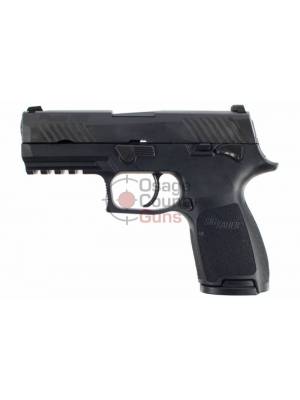
The modern handgun market is dominated by two ignition systems: striker-fired and hammer-fired. Striker-fired pistols, like the Smith & Wesson M&P Shield Plus or the Glock series, have a consistent trigger pull and fewer external controls, making them simpler to learn. They’re the default for most defensive roles. Hammer-fired pistols, like the classic 1911 in .45 ACP or the CZ 75, often feature a single-action trigger with a lighter, crisper break, preferred by many for target shooting. For a first-time buyer or a dedicated carry gun, a striker-fired 9mm is almost always the correct starting point. They are reliable, have ample capacity (15+ rounds is standard), and platforms like the Canik TP9 series offer exceptional value. You can browse our handgun categories to see the clear divide between these two operating systems.
The Modern Sporting Rifle: Understanding the AR-15 Platform
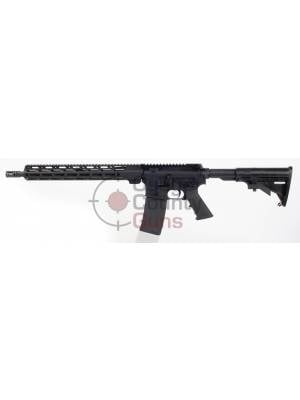
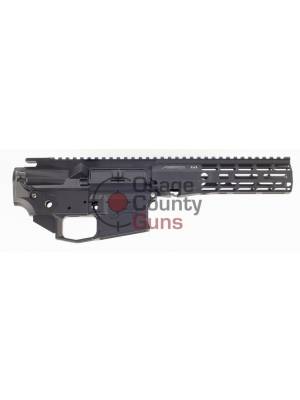
The AR-15 is a modular system, not a single gun. Its caliber, barrel length, and handguard define its use. A 16-inch barrel with a 1:8 twist rate chambered in 5.56 NATO is the versatile all-rounder, effective for defense and varmint control. A 20-inch heavy barrel in .223 Wylde is built for precision at the range. Key components to understand are the upper and lower receivers, the bolt carrier group (BCG), and the gas system (direct impingement). For a ready-to-shoot rifle, brands like Smith & Wesson (M&P Sport II) and Palmetto State Armory offer reliable entry points. For home defense, pairing a carbine with a quality weapon-mounted light like a Streamlight ProTac is non-negotiable. We stock complete rifles and critical components because understanding this platform is central to modern firearms ownership.
Shotgun Selection: Beyond Gauge
Choosing a shotgun involves more than picking 12-gauge or 20-gauge. The action type dictates its function. Pump-actions, like the Mossberg 500 or Remington 870, are supremely reliable for home defense and hunting. Semi-automatics, such as the Beretta A300, reduce felt recoil and allow faster follow-up shots, ideal for waterfowl or clay sports. For defensive use, an 18.5-inch cylinder-bore barrel is standard. For hunting, a 26-inch or 28-inch barrel with a choke tube system is required. Pay close attention to the chamber length (3″ for versatility) and the stock fit. A shotgun that doesn’t mount correctly will punish you with recoil. Ammunition selection is equally critical: low-recoil 00 buck for home defense, target loads for practice, and specific shot sizes for different game.
Safety, Storage, and the Law
Owning a firearm is a continuum of responsibility that begins before you leave the store. The four fundamental rules of safety are immutable: treat every gun as if it is loaded, never point it at anything you are not willing to destroy, keep your finger off the trigger until your sights are on target, and be sure of your target and what is beyond it. Secure storage is not optional. A quick-access biometric safe like a Vaultek for a bedside pistol and a sturdy stack-on cabinet for long guns are minimum standards. Finally, know Delaware law. While we are not lawyers, we emphasize that purchasers must understand state regulations on transport, use of force, and where firearms are prohibited. A responsible owner is an informed owner. Delaware Firearms provides the tools, but the duty of education rests with you.
What is the best caliber for a first-time handgun buyer?
For a first handgun, 9mm Luger is overwhelmingly the best choice. It offers an excellent balance of manageable recoil, high magazine capacity, widespread availability, and effective stopping power with modern defensive ammunition. It’s less expensive to practice with than .40 S&W or .45 ACP, which is the most critical factor for a new shooter. Models like the Glock 19 or Smith & Wesson M&P 2.0 in 9mm are the industry standards for a reason.
What’s the difference between 5.56 NATO and .223 Remington ammunition?
While the cartridges are very similar, 5.56 NATO chambers have higher pressure specifications. You can safely fire .223 Remington ammunition in a rifle chambered for 5.56 NATO, but you should not fire 5.56 NATO ammunition in a barrel marked only for .223 Remington, as it could create dangerously high pressures. Most modern AR-15s from Delaware Firearms are chambered in 5.56 NATO or the hybrid .223 Wylde, which is designed to safely and accurately fire both rounds.
How often should I clean my firearm?
There’s no single schedule, but a good rule is to clean after every range session. Firing creates carbon and metal fouling that can degrade reliability over time. For a carry gun fired only occasionally, a detailed field strip, clean, and light re-lubrication every 300-500 rounds or every 3-6 months is wise. Use quality solvents, copper brushes, and lubricants like CLP. A bone-dry gun or an over-saturated one can both malfunction. Regular maintenance is a non-negotiable part of ownership.
The right firearm is the one that fits your hand, fits your purpose, and you will train with consistently. Spec sheets are meaningless without practical application. We’ve built our inventory at Delaware Firearms around this principle, offering vetted models from trusted manufacturers that serve real-world roles. Stop theorizing and start handling. The best way to begin is to see and feel the options for yourself.
Last updated: March 25, 2026